
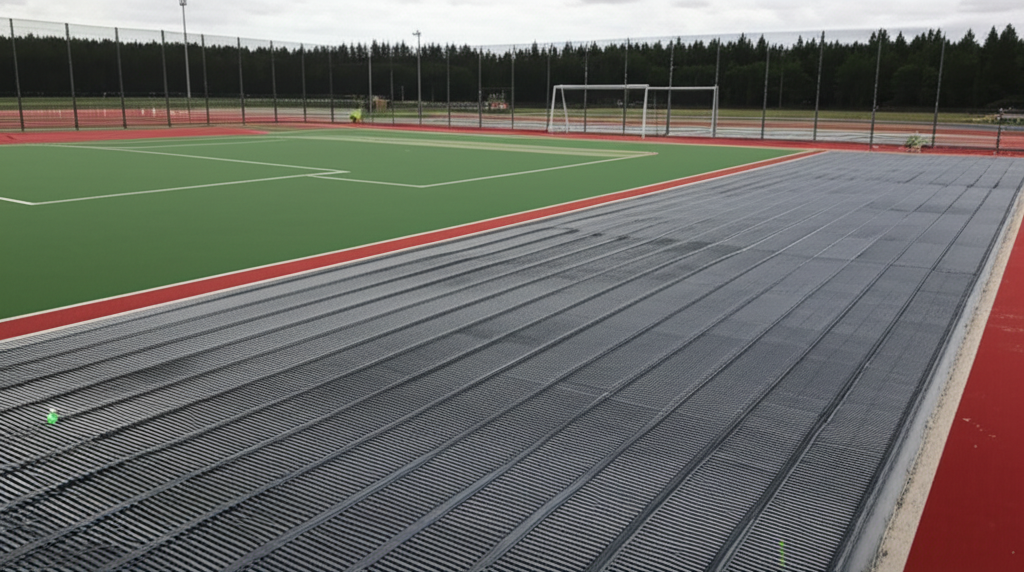
Sports Court Drainage: Why It Matters and How to Get It Right
Drainage is arguably the most important — and most overlooked — aspect of sports court construction. Poor drainage leads to standing water, surface damage, algae growth, and shortened surface life.
Slope Requirements
Outdoor courts need a minimum slope of 1% (1 inch per 10 feet) in one direction for proper surface drainage. The slope should be consistent and imperceptible during play. Most courts use a side-to-side slope rather than end-to-end.
Subsurface Drainage
French drains, perforated pipe systems, and gravel bases help manage groundwater. A proper drainage system adds $3,000–$10,000 to project costs but prevents far more expensive problems down the road.
Surface Drainage Options
Permeable surfaces: Modular tiles and permeable concrete allow water to pass through directly. Best for areas with well-draining soil.
Channel drains: Linear drains at court edges collect runoff. Essential for impermeable surfaces like standard concrete and acrylic.
Common Drainage Mistakes
- Insufficient base compaction leading to settling and low spots
- No perimeter drainage, causing water to pool at court edges
- Ignoring groundwater levels during site selection
- Using non-draining materials in the base without proper slope