
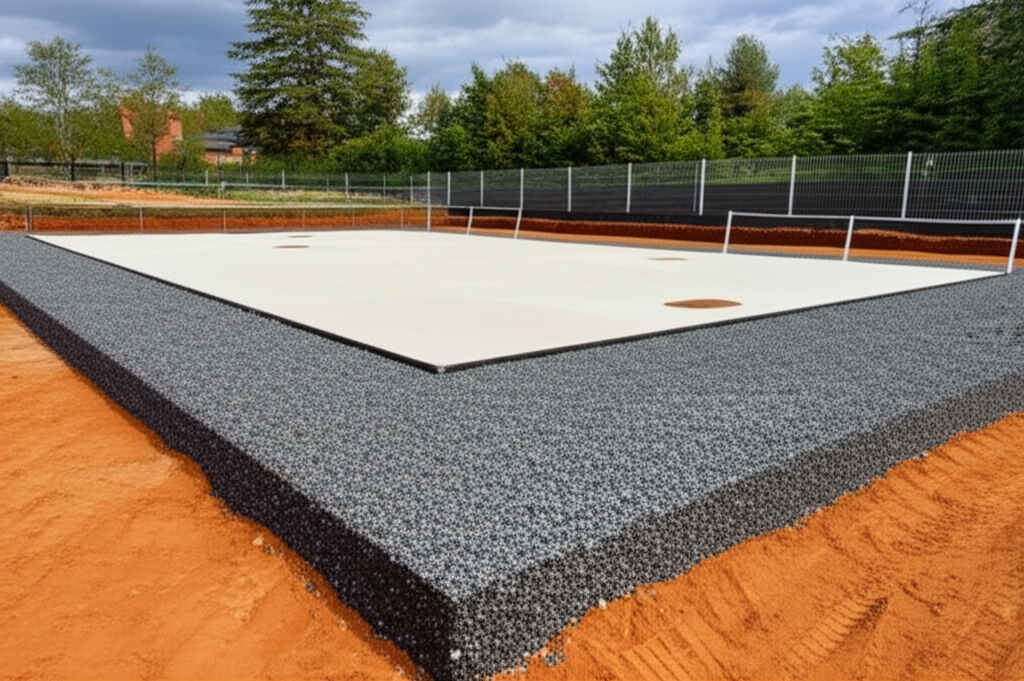
Concrete vs. Asphalt vs. Sport Tiles: Which Court Base Is Worth the Money?
Your court base material is the most consequential decision in the entire project. It determines cost, longevity, playing feel, maintenance burden, and what surface coatings you can apply on top. Here is an objective comparison of the three most popular options.
Concrete
Cost: $5–$9 per square foot installed (4-inch slab with proper base)
Lifespan: 25–30+ years with proper maintenance
Best for: Tennis, basketball, pickleball, multi-sport courts
Concrete is the gold standard for sports court bases. It provides the flattest, most stable foundation and accepts acrylic coatings beautifully. Post-tension concrete (which uses steel cables to prevent cracking) is the premium option for tennis courts and adds $2–$4 per square foot but virtually eliminates cracking.
Pros: Longest lifespan. Flattest surface. Best for coatings. Low long-term maintenance. Does not soften in heat.
Cons: Highest upfront cost. Requires 7-day cure time. Cracks can be expensive to repair. Harder on joints than alternatives.
Asphalt
Cost: $3–$6 per square foot installed (3-inch base)
Lifespan: 15–20 years with resurfacing every 3–5 years
Best for: Tennis, basketball, recreational multi-sport
Asphalt is the traditional budget alternative to concrete. It provides a solid playing surface at a lower upfront cost. However, the maintenance cycle is shorter — asphalt courts need seal coating and crack repair more frequently, and they are more susceptible to heat damage. In hot climates, asphalt can soften and deform under sustained high temperatures.
Pros: Lower upfront cost. Good playing surface. Quick installation. Easy to patch and repair. Slight flex reduces joint impact.
Cons: Shorter lifespan. More frequent resurfacing needed. Softens in extreme heat. Cracks more readily in cold climates. Ongoing maintenance costs add up.
Modular Sport Tiles
Cost: $3–$7 per square foot for tiles (installed over existing hard surface or compacted base)
Lifespan: 10–15 years before replacement
Best for: Basketball, pickleball, volleyball, multi-sport, backyard courts
Modular tiles (from brands like Sport Court, VersaCourt, and SnapSports) are interlocking polypropylene tiles that create a floating surface. They can be installed over existing concrete, asphalt, or even a well-compacted gravel base. This makes them the easiest DIY option and a popular choice for backyard courts.
Pros: Easy installation (often DIY). Excellent drainage. Forgiving on joints. No cracking. Multiple colors available. Portable if needed.
Cons: Shorter lifespan. Can shift or warp in extreme heat. Different ball bounce characteristics than traditional surfaces. Higher long-term cost due to replacement cycle. Not suitable for competitive tennis.
Total Cost of Ownership Over 20 Years
The upfront price does not tell the full story. Here is what each option costs over a 20-year period for a 3,600 sq ft court (60×60 feet):
- Concrete: $25,000 install + $8,000 resurfacing (once) + $2,000 maintenance = $35,000
- Asphalt: $16,000 install + $20,000 resurfacing (4 times) + $4,000 maintenance = $40,000
- Sport Tiles: $18,000 install + $18,000 replacement (once at year 12) + $1,000 maintenance = $37,000
The takeaway: concrete has the highest upfront cost but the lowest total cost of ownership. Asphalt is cheapest upfront but most expensive over time. Tiles fall in the middle on both counts.
Our Recommendation
If budget allows: Post-tension concrete. It is the best long-term investment for any permanent court.
If budget is tight: Standard concrete over asphalt. The modest price premium pays for itself in reduced maintenance within 5–7 years.
If you want easy or temporary: Sport tiles. They are the best choice for rentals, backyard projects, or if you are unsure about long-term commitment.