
Should You Build a Multi-Sport Court? Pros, Cons, and Cost Analysis
A multi-sport court sounds like the ultimate backyard upgrade — one surface that supports basketball, pickleball, tennis, volleyball, and more. And for many homeowners, it is the smartest investment. But multi-sport courts come with design trade-offs that are worth understanding before you commit. Here is an honest breakdown.
The Case for a Multi-Sport Court
Cost Efficiency
Building one multi-sport court costs far less than building separate dedicated courts. A 60×90-foot multi-sport court runs $20,000–$50,000 depending on surface type and location. Building separate basketball, pickleball, and tennis courts would cost $60,000–$150,000+ combined. That is a savings of 50–70%.
Space Savings
Most residential properties cannot fit multiple full-size courts. A multi-sport court packs several games into a footprint roughly the size of a single tennis court. For the average backyard, this is the only realistic option for playing more than one sport.
Family Versatility
Different family members often prefer different sports. Kids want basketball, adults want pickleball, guests enjoy volleyball. A multi-sport court means everyone gets to play their game without a second construction project.
Higher Property Value
Real estate data suggests that well-built sports courts add $10,000–$30,000 to home values. A multi-sport court appeals to a wider range of buyers than a single-sport court, potentially increasing the value add.
The Trade-Offs You Should Know About
Compromised Dimensions
Unless you go very large, a multi-sport court typically uses non-regulation dimensions for at least one sport. A 60×90-foot court provides a full basketball court but only about 80% of a tennis court. If competitive play in a specific sport matters to you, a dedicated court is better.
Line Confusion
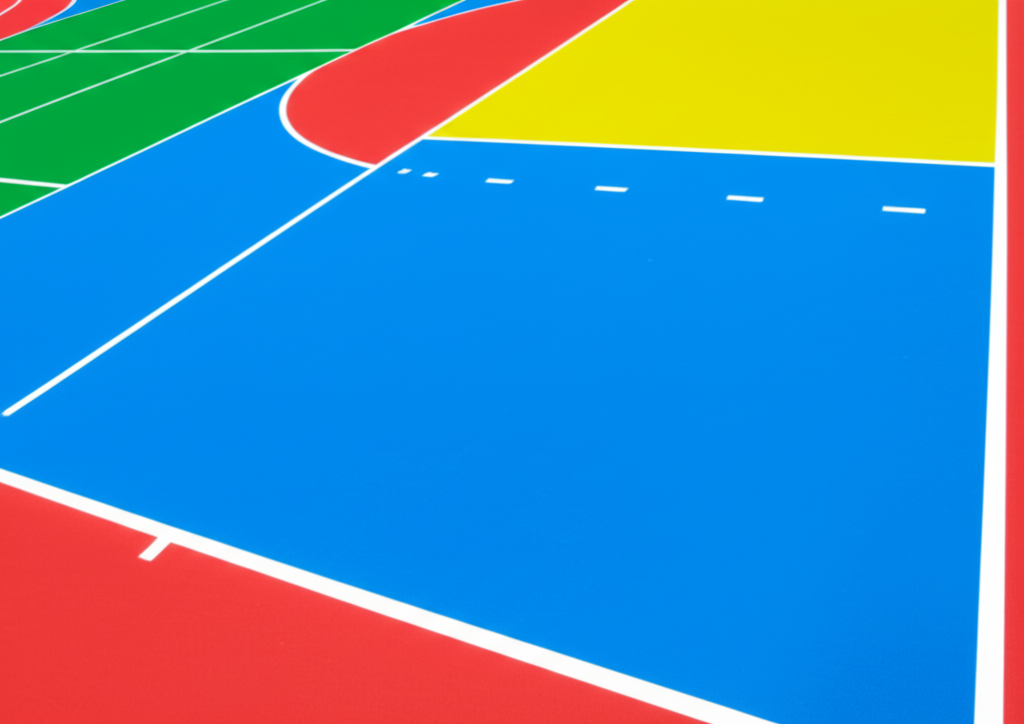
Multiple sets of lines on one surface can be visually busy. Using different colors helps (white for basketball, yellow for pickleball, green for tennis), but some players find it distracting. This is the most common complaint from multi-sport court owners.
Surface Compromise
Different sports perform best on different surfaces. Basketball favors a hard, high-traction surface. Tennis players prefer moderate grip with some give. Pickleball works well on most hard surfaces. A multi-sport court surface is a compromise — good for everything, perfect for nothing.
Equipment Logistics
Switching between sports means moving nets, adjusting goals, and potentially swapping out equipment. Portable net systems make this manageable, but it is not as seamless as walking onto a dedicated court that is always ready to play.
Cost Breakdown: Multi-Sport vs. Dedicated
Multi-Sport Court (60×90 ft)
- Concrete base: $8,000–$15,000
- Sport tile or acrylic surface: $10,000–$25,000
- Multi-sport line painting: $800–$2,000
- Basketball goal: $500–$3,000
- Portable net systems: $500–$2,000
- Fencing: $3,000–$10,000
- Lighting: $5,000–$15,000
- Total: $28,000–$72,000
Three Separate Dedicated Courts
- Basketball court (50×84 ft): $15,000–$45,000
- Pickleball court (30×60 ft): $10,000–$30,000
- Tennis court (60×120 ft): $25,000–$70,000
- Total: $50,000–$145,000
Best Surface Materials for Multi-Sport
Modular sport tiles are the most popular choice for multi-sport courts. They offer good performance across all sports, drain well, and come in multiple colors for line differentiation. Brands like Sport Court, VersaCourt, and SnapSports specialize in multi-sport tile systems. Cost: $3–$7 per square foot.
Acrylic-coated concrete is the premium option. It provides a more traditional court feel, better ball response, and longer lifespan. It is harder to install and more expensive but delivers superior play quality. Cost: $5–$10 per square foot.
Who Should Build a Multi-Sport Court?
Yes, go multi-sport if: You want versatility, have limited space, have family members who play different sports, or want the best value for your construction budget.
Go dedicated instead if: You play one sport competitively, need regulation dimensions, want the best possible playing experience for a specific sport, or have the space and budget for multiple courts.
Design Tips for the Best Multi-Sport Experience
- Prioritize your primary sport when choosing dimensions — build around that and fit others in
- Use high-contrast colors for different sport lines (not just different shades of the same color)
- Invest in quality portable net systems — cheap ones are frustrating to set up
- Plan equipment storage near the court so switching sports is easy
- Consider an adjustable-height basketball goal for different ages and skill levels