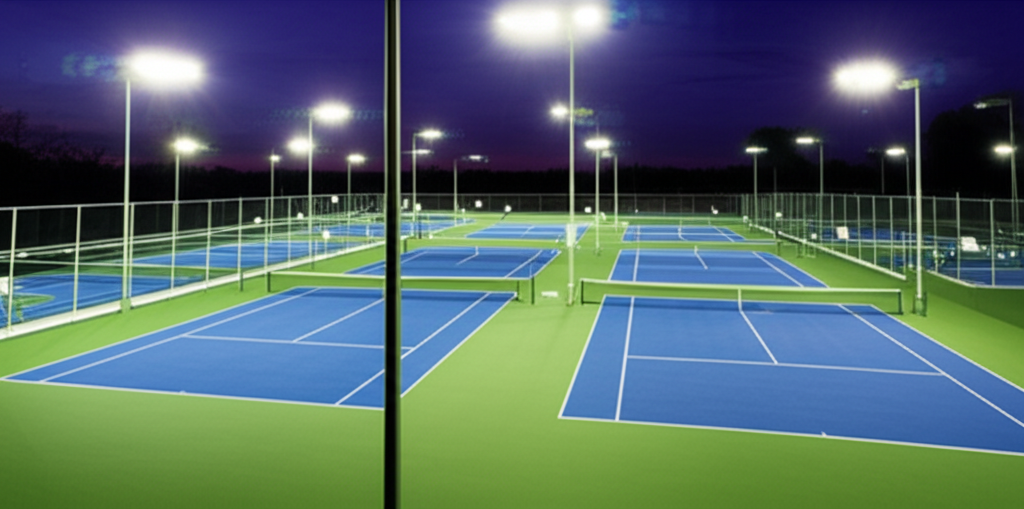
Complete guide to tennis court lighting comparing LED and traditional options including costs, performance, installation, and energy efficiency.
Introduction to Tennis
Tennis facilities require specialized knowledge and expertise for optimal performance and safety.
Technical Specifications
Professional tennis facilities must meet specific dimensional and performance standards to ensure fair play and participant safety.
Surface Options
Different surface materials offer varying performance characteristics, costs, and maintenance requirements.
Installation Process
Proper installation is critical for surface performance and longevity. The process typically involves:
- Site preparation and excavation
- Base construction and compaction
- Drainage system installation
- Surface application and curing
- Line marking and finishing
Maintenance Requirements
Regular maintenance extends surface life and ensures consistent performance. Develop a maintenance schedule appropriate for usage levels and climate conditions.
Popular Upgrades
Consider these popular additions to enhance your tennis facility:
- LED lighting systems
- Fencing and windscreens
- Spectator seating
- Storage solutions
- Shade structures
Frequently Asked Questions
Should I choose LED or traditional lighting for my tennis court?
LED lighting is superior in almost every aspect: 60% lower energy costs, 5x longer lifespan (50,000 vs 10,000 hours), instant-on capability, and better light quality. Higher upfront cost ($12,000-$25,000) vs traditional ($8,000-$15,000) pays back in 2-4 years.
How many foot-candles do tennis courts need?
Recreational tennis needs 30-50 foot-candles, competitive play requires 50-75 foot-candles, and tournament level needs 75-125 foot-candles. Proper lighting design ensures even distribution without hot spots or shadows that affect play.
How much does tennis court lighting cost to operate?
LED lighting costs $50-$150 per month for 3-4 hours nightly operation. Traditional metal halide costs $120-$350 monthly for the same usage. LED fixtures also reduce maintenance costs due to longer lifespan and lower failure rates.
What's the best lighting layout for a tennis court?
Four poles with 2-4 fixtures each is standard for single courts. Poles should be 20-25 feet high and positioned to minimize shadows and glare. Multi-court facilities benefit from shared infrastructure with 6-8 poles for two courts.
Conclusion
This comprehensive guide provides the essential information you need for tennis court lighting guide: led vs traditional. For personalized advice and professional installation services, contact local sports surface contractors through our verified directory.